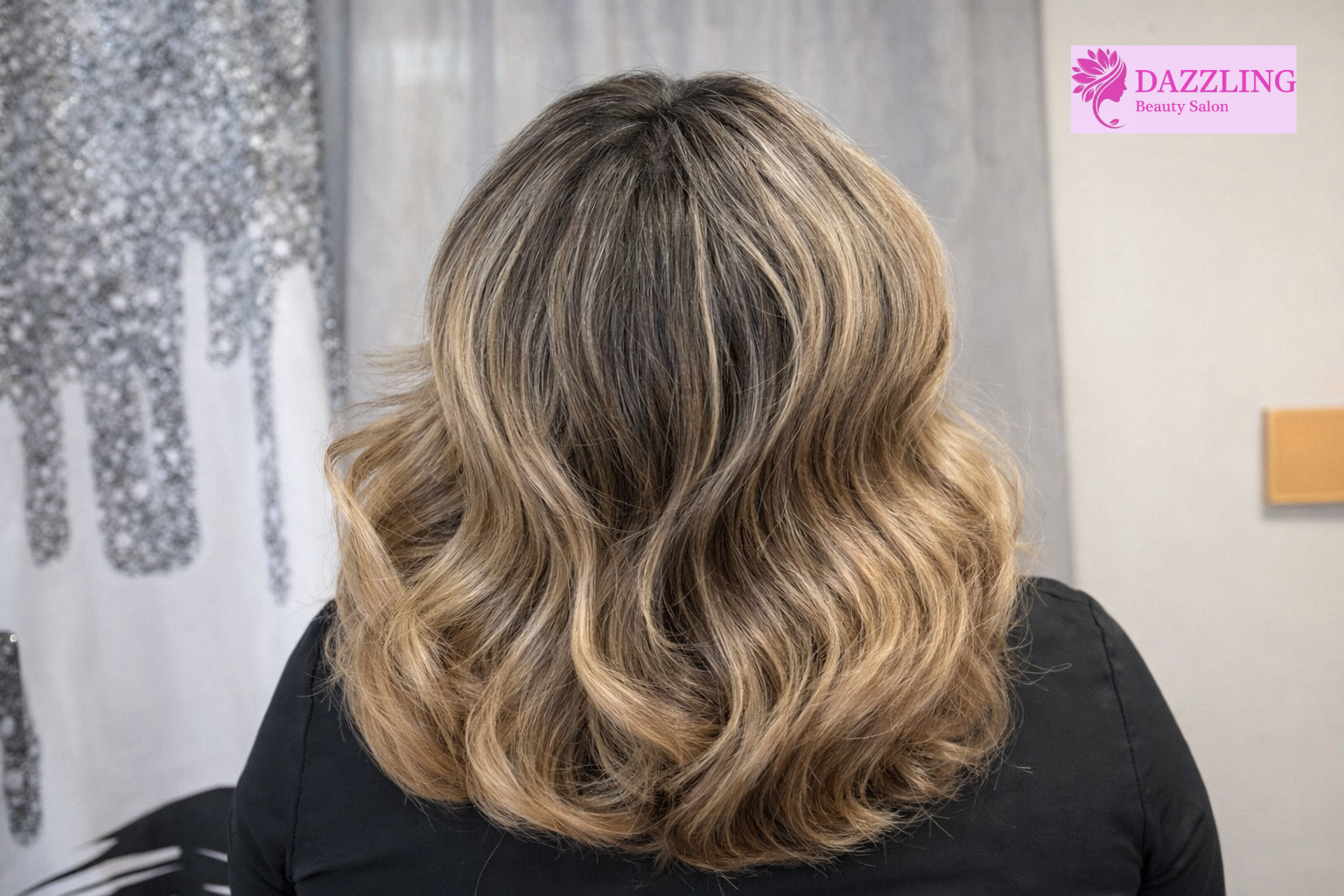
Balayage vs. Traditional Hair Color: Which One Is Right for You?
Trying to decide between balayage and traditional hair color can be tricky. Both can give you stunning results, but what's best for you depends on your lifestyle, how much upkeep you're up for, and the look you want. If you're torn between soft, natural highlights and more structured coverage, let's explore these options together.
At Dazzling Beauty Salon, we've seen many clients start with one idea and end up choosing a color that fits their long-term goals, hair health, and maintenance preferences. Whether you're after a subtle change, full gray coverage, or a big transformation, understanding how each method works can help. If a trim is also on your agenda, our women's haircut services and hair styling options can give you a fresh start for your new look.
This article lays out the pros, cons, maintenance needs, and who each style is best for. Plus, we'll share salon tips and useful examples to help you make a confident choice. For more on hair safety and cosmetic ingredients, the U.S. Food and Drug Administration has some great consumer info about hair dyes at FDA hair dye guidance.
What Is Balayage?
A hand-painted color technique
Balayage involves painting color onto the hair's surface in a sweeping motion. This creates a smooth transition from darker roots to lighter ends, resulting in a natural, blended look. Balayage is customizable, whether you want bright highlights or just a hint of dimension.
Why balayage looks so natural
Balayage mimics how the sun naturally lightens hair, which is why it's so popular. Instead of uniform foil sections, the colorist focuses on where sunlight would hit your hair, creating a softer grow-out line. This is perfect if you want a polished look without noticeable regrowth.
Best hair types for balayage
Balayage suits many hair textures, especially medium to long hair where the color can really show movement. It can add depth to fine hair and dimension to thicker locks. If you're planning a color service and want smoother, more manageable hair, a gentle shampoo service beforehand can help.
What Is Traditional Hair Color?
Full-coverage, even application
Traditional hair color usually means all-over color, root touch-ups, or standard permanent and demi-permanent applications that coat the hair evenly. It's often chosen when you want to go darker, cover gray, refresh a fading shade, or maintain a consistent tone from roots to ends.
Why people choose traditional color
Traditional color is great for predictable coverage and precise shade control. If your goal is full gray coverage, maintaining a signature shade, or making a bold color change, this method is often the way to go. It also lets you keep the same color identity over time since the shade can be consistently refreshed.
Different forms of traditional color
Traditional color includes permanent and semi-permanent color, glosses, root touch-ups, and corrective services. If you need seamless regrowth coverage, a color touch-up might be right for you. For a richer all-over change, a full hair dye service could be the answer. If gray hair is your main concern, a gray hair touch-up can help maintain a neat, youthful finish.
Balayage vs. Traditional Color: The Main Differences
Application and placement
The primary difference is in the application. Balayage is painted to create softness and dimension, while traditional color is applied evenly for full saturation or root matching. This affects the final look and how quickly it grows out.
Maintenance and grow-out
Balayage usually requires less maintenance since the roots are less noticeable as they grow. Traditional color, especially if it's far from your natural shade, may need more frequent upkeep to keep roots blended. For fewer salon visits, balayage is often more convenient. If you prefer a consistent tone, traditional color might be easier emotionally and visually.
Impact on hair health
Both techniques can be gentle, but the amount of processed hair can vary. Balayage might be gentler, focusing on selected sections rather than the whole head. Traditional color may cover more but can be manageable with the right care. For smoother, shinier hair after coloring, treatments like keratin treatment or Botox capilar can help.
Who Should Choose Balayage?
You want dimension, not strict uniformity.
If you like hair that looks soft, modern, and a bit lived-in, balayage is a great choice. It's perfect for those who want brightness without committing to high-contrast or heavily foiled looks.
You do not want frequent root upkeep.
Busy and prefer a style that grows out gracefully? Balayage is practical. The blended color placement makes regrowth less noticeable, ideal for professionals, parents, or students who want a polished look without constant appointments.
You already have a good base color.
Balayage works well when your starting shade is close to what you want. Medium brunette hair can be enhanced with caramel or honey, and dark blonde can benefit from brighter accents. If you want more volume, hair extensions can add length and dimension.
Who Should Choose Traditional Hair Color?
You want gray coverage or a solid shade.
For full gray coverage and uniform shine, traditional color is often best. If you dislike roots, prefer a clean finish, or want your color the same from root to tip, this method works well. It's also great for precise transformations.
You want a dramatic change.
Switching between light and dark shades or trying a new fashion color? Traditional color might be needed for an even foundation. Balayage can lighten selectively but isn't always best for a complete makeover. A stylist's consultation is key here.
You prefer a polished and consistent finish.
Some love glossy, one-tone hair. Traditional color creates richness and depth that feels classic and refined. Whether you're after a sleek brunette, rich red, or cool ash blonde, this option gives stylists strong control over the tone.
Maintenance: What to Expect After Your Appointment
Balayage upkeep
Balayage typically needs less frequent salon maintenance than all-over color but benefits from good at-home care. Use color-safe shampoo, moisturizing conditioner, and heat protection to preserve the finish. Many clients return for toning or glossing rather than full re-coloring.
Traditional color upkeep
Traditional color usually requires more regular maintenance, especially for gray coverage or uniform tone. Roots show faster, and fading can occur depending on the shade and hair porosity. A schedule with color correction and refresh visits keeps it neat and intentional.
Professional aftercare matters
Stylists often recommend limiting heat, washing with lukewarm water, and avoiding harsh clarifying products after coloring. The American Academy of Dermatology offers general hair and scalp care tips at AAD hair and scalp care resources. Good aftercare keeps your color looking fresh and healthy longer.
How to Choose the Right Option for Your Lifestyle
Consider your schedule
If you want to space out salon visits and reduce root-related stress, balayage is convenient. Prefer a controlled look and don't mind regular maintenance? Traditional color might suit you better.
Consider your budget
Both services have different costs based on the work involved, hair length, and additional treatments. Balayage can be a bigger upfront investment due to its custom nature but may need fewer touch-ups over time. Traditional color might be easier on the budget in shorter cycles.
Consider your style goals.
Do you want soft and dimensional or sleek and uniform hair? If you want movement and brightness with easy grow-out, balayage is often the winner. For precision, full coverage, or dramatic shifts, traditional color may be better.
What a Salon Consultation Should Cover
Hair history and condition
A good consultation starts with your hair history. Previous dye, bleaching, chemical treatments, and heat damage all impact how color will work. A skilled stylist will assess your hair before suggesting a service.
Maintenance expectations
Your stylist should discuss how much upkeep you're comfortable with. This is important because the best color looks great on day one and fits your routine. If you style for events, pair a professional makeup service with a hair styling package for a polished look.
Realistic results
Not every inspiration photo works for every head of hair. A good consultation explains what can be achieved in one session, what may need multiple visits, and how to maintain hair health. Discuss toners, glosses, and treatments that support your final look.
Examples of How Each Technique Works in Real Life
The low-maintenance professional
A busy professional with naturally brunette hair might choose balayage to brighten the face and ends without frequent upkeep. The result is subtle, dimensional, and manageable between meetings and travel. This look stays intentional even after weeks of grow-out.
The gray coverage client
Someone with strong regrowth or a lot of gray might prefer traditional color for complete coverage and a uniform look. Consistency is key here, with root maintenance and refreshes keeping the style neat.
The transformation client
A client wanting to move from flat, faded color to a more dimensional look might start with a traditional base and add balayage accents later. This layered approach offers coverage and movement. If the hair needs extra softness post-color, a keratin treatment can improve manageability.
Frequently Asked Questions About Balayage vs. Traditional Hair Color
Does balayage work on short hair?
Yes, it can work on short hair, but the effect may be more subtle due to less length for transitions. A stylist can place highlights around the face, crown, or ends to create movement, customizing to complement the haircut.
Is traditional color always damaging?
No, it's not automatically damaging. Hair condition depends on current health, formula used, coloring frequency, and aftercare quality. A thoughtful salon approach keeps hair looking healthy and glossy over time.
Which option lasts longer?
Balayage usually lasts longer for root blending before needing a refresh. For a single tone with no variation, traditional color can last well with timely touch-ups. Choose based on whether you prioritize grow-out softness or color consistency.
Final Thoughts: Which One Is Right for You?
Choose balayage if you want softness and flexibility
Balayage is ideal for dimension, natural-looking brightness, and low-maintenance grow-out. It's great for those who want a modern, sun-kissed finish that stays beautiful between appointments.
Choose traditional color if you want precision and coverage
Traditional hair color is best for full gray coverage, uniform results, and dramatic shade changes. It offers control over the final tone for a polished, classic look. Predictability makes it the right choice for many.
Talk to a stylist before deciding.
The best way to decide is by looking at your hair history, lifestyle, and styling goals. A professional consultation can help you choose whether balayage, traditional color, or a mix is best for your hair. Dazzling Beauty Salon can help you plan a personalized service to suit your needs. For more on hair health, check out the National Institute of Arthritis and Musculoskeletal and Skin Diseases' guidance in the NIAMS hair care information. A thoughtful plan makes all the difference.