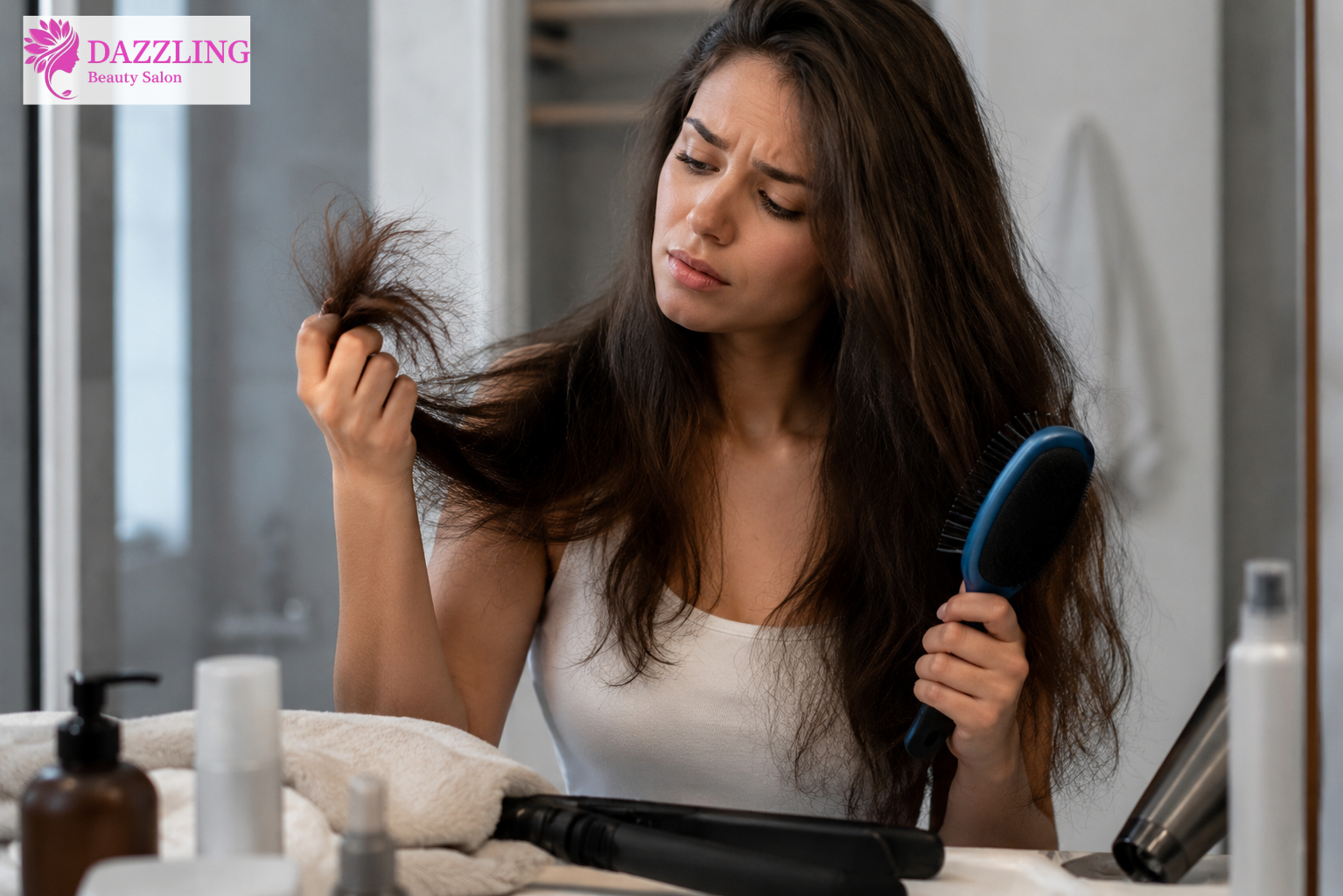
Achieving healthy hair isn't usually about finding a miracle product. It's more about those little choices you make every day—like how often you wash, how you dry, and even what you do before bed. If your hair feels dry, frizzy, weak, or thin, it might not just be genetics; it could be those everyday habits adding up. In this guide, we're breaking down the daily actions that can damage your hair and offering some healthier, salon-approved alternatives. If you're looking for more personalized help, our gentle shampoo service and women's haircut service can help set a healthier foundation for your routine.
The American Academy of Dermatology says that hair breakage and shedding can happen because of grooming practices, heat, and chemicals—not just internal health factors. So, your daily routine matters more than you might think. Small changes can really improve shine, softness, and manageability. If you need expert styling tips to reduce stress on your hair, our hair styling services can help you look polished without overworking your hair. For more on hair health, check out the National Institutes of Health's info on hair structure and growth cycles at the NCBI Bookshelf.
Why Everyday Hair Habits Matter
Hair Damage Usually Happens Gradually
Your hair doesn't usually get damaged overnight. It gets weaker from repeated friction, dehydration, tension, and heat exposure. Over time, these habits can make your hair dull or frizzy. The good news? Once you know the cause, you can often reverse the damage. That's why salon pros start by chatting about your habits before recommending products or treatments.
Scalp Health Is Part of the Equation
Most people focus on the visible part of the hair, but a healthy scalp is where stronger hair starts. If products, buildup, or overwashing mess with your scalp, your hair might get dry at the ends and oily at the roots, or vice versa. A balanced routine supports both scalp comfort and hair strength. Not sure what your scalp needs? An in-salon chat can help you find the right cleaning schedule and aftercare.
Professional Support Can Prevent Repeat Damage
At Dazzling Beauty Salon, we often see clients trying to “fix” their hair while unknowingly repeating damaging habits. A good haircut, thoughtful washing schedule, and the right routine can restore resilience. Services like salon shampoo and scalp care and custom women's haircuts can make at-home care easier by reducing tangles and split ends. For more on hair loss and breakage, the Cleveland Clinic offers an overview at Cleveland Clinic.
1. Overwashing Your Hair
Frequent Washing Strips Natural Oils
One common mistake is washing hair too often. Shampoo is meant to clean away oil and buildup, but daily washing can strip the natural oils that protect your scalp and strands. This can make hair rough and prone to frizz. While some people might need more frequent cleansing due to fine hair or active lifestyles, many hair types are better off with a less aggressive schedule.
Finding the Right Washing Rhythm
Most folks do well washing their hair about two to three times a week, though it depends on your hair's texture, scalp type, and activity level. Curly and dry hair types often benefit from fewer washes, while oily scalps might need slightly more. If your hair gets greasy fast, try extending the time between washes gradually. A professional salon shampoo treatment can help reset buildup without leaving strands feeling stripped.
Signs You're Overwashing
If your hair feels squeaky-clean but also tight or rough after washing, your routine might be too harsh. Overwashed hair often loses elasticity and becomes hard to style. You might also notice increased frizz or a scalp that feels irritated. To rebalance, use lukewarm water, focus shampoo on the scalp, and let the lather rinse through the ends instead of scrubbing all over.
2. Using Harsh or Low-Quality Products
Why Ingredient Choice Matters
Not every shampoo or conditioner is right for every hair type. Ingredients like strong sulfates can be too stripping for dry or color-treated hair, while heavy silicones may cause buildup. This doesn't mean these ingredients are bad, but they should match your hair's needs. According to Femina, harsh formulas can slowly reduce shine and softness.
Choose Products for Your Texture and Condition
A product that works great on thick, coarse hair might leave fine hair limp. Likewise, a formula for oily roots might leave dry lengths even drier. Instead of choosing products based on marketing claims, look at your actual needs: hydration, color care, curl definition, scalp balance, or frizz control. If you're not sure where to start, a stylist can recommend product pairings that support your texture and styling goals.
Color-Treated Hair Needs Extra Care
If you color your hair often, product choice is even more crucial. Color-safe shampoos and conditioners help preserve tone and prevent fading, especially when combined with gentle washing and heat protection. Our hair dye service and color touch-up service are popular for fresh color, but keeping that color vibrant depends heavily on home care. For more on chemical stress and hair structure, the American Academy of Dermatology provides tips at AAD Healthy Hair Tips.
3. Rough Handling of Wet Hair
Wet Hair Is More Fragile
Wet hair is especially vulnerable because water temporarily changes its structure. Vigorous towel drying, harsh brushing, or rough detangling can cause snapping and frizz. Many think they're being efficient by rubbing hair dry quickly, but it often increases breakage. Gentle handling is one of the simplest ways to protect your hair's integrity.
Better Ways to Dry and Detangle
Instead of rubbing with a standard towel, blot your hair with a microfiber towel or a soft cotton T-shirt. These materials reduce friction and help keep the cuticle intact. When detangling, work from the ends upward and use a wide-toothed comb or a detangling brush designed for damp hair. If your hair tangles easily, consider a haircut that removes bulk and creates a more manageable shape, like our women's haircut service or men's haircut service.
Importance for Long-Term Health
Repeated rough handling does more than cause split ends. Over time, it can lead to noticeable reduction in length retention, meaning your hair grows but breaks off before getting longer. This is frustrating for those trying to grow hair out. Salon professionals often see better results when clients shift to gentler post-shower routines since a lot of hidden breakage starts there.
4. Tight Hairstyles and Constant Tension
How Tension Affects the Hairline
High ponytails, tight braids, slick buns, and heavy extensions can create repeated pulling on the same scalp areas. Over time, this tension may lead to breakage along the hairline and, in serious cases, thinning. While occasional tight styling isn't usually a problem, making it a daily habit can be. The body of evidence on traction alopecia is well documented in dermatology literature and summarized by NCBI on traction alopecia.
Styling Without Constant Stress
Protective hairstyles should protect the hair, not stress it. Looser braids, low ponytails, soft clips, satin scrunchies, and alternating part placement can reduce tension significantly. It's also smart to give your scalp rest days between tight styles. If you regularly wear polished looks for work or events, ask for styles that look neat but are built with lighter tension and less heat exposure.
When Styling Choices Need a Reset
If you notice soreness at the scalp, thinning around the temples, or repeated breakage in the same spots, it might be time to change your style. A haircut can help remove damaged ends, and a smoother finish treatment can make low-tension styling easier. Depending on your hair type, services like Botox Capilar or Keratina may help reduce daily styling stress by making the hair smoother and easier to manage.
5. Excessive Heat Styling
What Heat Does to the Strand
Flat irons, curling wands, and blow dryers are useful tools, but frequent high heat can weaken the hair’s protein structure and dry out moisture inside the strand. That’s why hair may look shinier immediately after heat styling yet feel drier and more fragile later. Once damage builds, heat can also exaggerate frizz and make styling take even longer. This cycle is why many clients feel like they’re constantly “fixing” their hair without seeing lasting improvement.
How to Reduce Heat Without Sacrificing Style
The goal isn’t to eliminate styling tools but to use them intentionally. Air-dry when possible, use the lowest effective temperature, and always apply a heat protectant before styling. You can also spread out heat styling sessions by wearing styles that work with your natural texture. Our hair styling service can help you create longer-lasting looks that rely less on daily heat. For best practices, the Professional Beauty Association emphasizes the value of heat moderation and proper product selection.
Signs Your Heat Routine Is Too Aggressive
If your hair feels crisp, loses moisture quickly, or breaks when brushed after heat styling, the temperature might be too high or the frequency too frequent. You might also notice your curl pattern loosening or your ends becoming progressively rougher. A temporary shine isn’t worth ongoing structural damage. In many cases, reducing heat even by a few styling sessions per week makes a visible difference in a month or two.
6. Sleeping with Damp Hair and Ignoring Nighttime Friction
Why Bedtime Habits Affect Breakage
Going to bed with damp hair can create unnecessary friction as strands rub against the pillow throughout the night. This can lead to tangling, stretching, and breakage, especially for fragile or color-treated hair. When hair is already weakened by washing or heat, overnight friction becomes an added stressor. That’s why nighttime care is as important as daytime styling.
How to Make Sleep More Hair-Friendly
Whenever possible, dry your hair before bed. If that’s not realistic, allow it to air-dry partially and secure it loosely to prevent tangling. A silk or satin pillowcase can also reduce friction and help hair retain moisture better than cotton. This is a small adjustment but can significantly improve softness and reduce morning knots. If frizz is a recurring issue, consider a smoother finishing routine with frizz-reducing treatment options that support easier styling.
Best Nighttime Routines for Different Hair Types
Curly and coily hair often benefits from pineapple styling, loose braids, or protective wraps. Straight and fine hair may need only a loose clip or a low, soft tie. The right solution depends on density, length, and how easily your hair tangles. Nighttime habits are one of the easiest places to make a low-effort, high-impact change, and many clients notice fewer knots almost immediately.
7. Dirty Tools, Buildup, and Environmental Stress
Brushes and Combs Need Cleaning Too
If your brushes are full of old hair, dust, oil, and product residue, you may be reapplying buildup every time you style. Dirty tools can also tug more aggressively because debris interferes with smooth detangling. Cleaning your brushes, combs, and clips regularly is a simple hygiene step that supports scalp health and cleaner styling results. This habit matters especially if you use gels, serums, dry shampoo, or leave-in creams often.
Sun, Humidity, Pollution, and Hard Water
Environmental stress is another hidden factor. UV exposure can dry hair and fade color, humidity can increase frizz, and pollution or mineral-heavy water can leave residue behind. Austin’s hot climate makes these concerns especially relevant for many clients, which is why humidity-resistant styling and protective care are so valuable. For practical summer protection ideas, check out our article on how to keep your hair healthy and sun-protected this summer in Austin for more tips.
Protecting Hair Without Overcomplicating Your Routine
You don’t need a dozen products to defend against environmental stress. A UV-conscious leave-in, clean styling tools, a protective hairstyle on high-exposure days, and regular clarifying when buildup appears can go a long way. If you also need color refreshes or repair, services like color correction and gray hair touch-up can help restore a polished look when environmental damage has made hair appear faded or uneven.
8. When to Get Professional Help and How to Build a Healthier Routine
Signs You Need a Reset
If your hair is breaking more than usual, feels dry even after conditioning, or seems to refuse styling no matter what you try, it might be time for a professional assessment. Split ends, frizz that doesn’t calm down, and thinning around stressed areas are all signs that the routine needs adjustment. A stylist can help identify whether the issue is mechanical damage, product overload, or a cuticle problem caused by repeated stress. Even a simple trim can improve the look and feel of the hair immediately.
How a Salon Can Support Long-Term Hair Health
Salon visits should be more than cosmetic appointments; they can be part of a hair-health plan. At Dazzling Beauty Salon, we can help clients choose services that reduce styling time, improve manageability, and support healthier ends. Depending on the condition of your hair, this might include shape-focused cutting, gentle cleansing, or smoothing services that make daily care easier. The right service mix can help you maintain progress between appointments rather than starting over every few weeks.
What a Healthier Routine Looks Like in Practice
A better routine is usually simple: wash less often, use gentle products, detangle carefully, reduce heat, avoid tight tension, and protect hair at night. Add regular trims and occasional professional care to keep split ends from traveling upward. For many people, these changes are enough to improve shine, reduce shedding from breakage, and make the hair easier to style. If you are ready to refresh your routine, our team can help you build a plan that fits your hair type and lifestyle.
Frequently Asked Questions About Everyday Hair Damage
How Often Should I Wash My Hair?
There's no single answer for everyone, but two to three times per week works well for many. Oily scalps, sweaty workouts, or heavy product use might require a different rhythm. The key is to cleanse often enough to stay comfortable without stripping your natural moisture.
What's the Fastest Way to Reduce Breakage?
Start with easy wins: stop rough towel-drying, reduce heat styling, switch to gentler products, and avoid tight hairstyles. These changes usually make a noticeable difference quickly. Pairing them with a professional trim can remove the oldest, weakest ends and improve results faster.
Do I Need Special Products for Damaged Hair?
Yes, but “special” should mean appropriate, not complicated. Damaged hair often benefits from moisturizing conditioners, bond-supporting treatments, and color-safe formulas. The best products are the ones matched to your hair type and current condition, not just the most expensive option on the shelf.
Can Salon Treatments Really Help at Home?
Absolutely. A salon service can make your hair easier to maintain, which reduces the need for heat, tension, and repeated manipulation. If you want help choosing the right path, ask about services that improve manageability, like keratin smoothing or a customized haircut. Small professional adjustments often lead to better home results for weeks afterward.
Conclusion: Small Habits, Big Difference
Most hair damage comes from repeated everyday behaviors, not one dramatic mistake. Overwashing, harsh products, rough detangling, tight styles, frequent heat, poor nighttime habits, and environmental exposure can all chip away at hair health over time. Once you identify which habits are causing the most stress, you can replace them with smarter routines that protect shine, strength, and length retention. In many cases, the most effective solution is not more effort, but gentler effort.
If you are ready to improve your hair health with expert support, Dazzling Beauty Salon can help you build a routine that works for your texture, goals, and lifestyle. Explore our hair styling, women's haircuts, hair dye, and Botox Capilar services to create a healthier, easier-to-manage look. To schedule a visit or ask questions about the right service for your hair, contact us at (512) 762-8555 or visit theaustinhairsalon.com. A few thoughtful changes today can protect your hair for the long term.