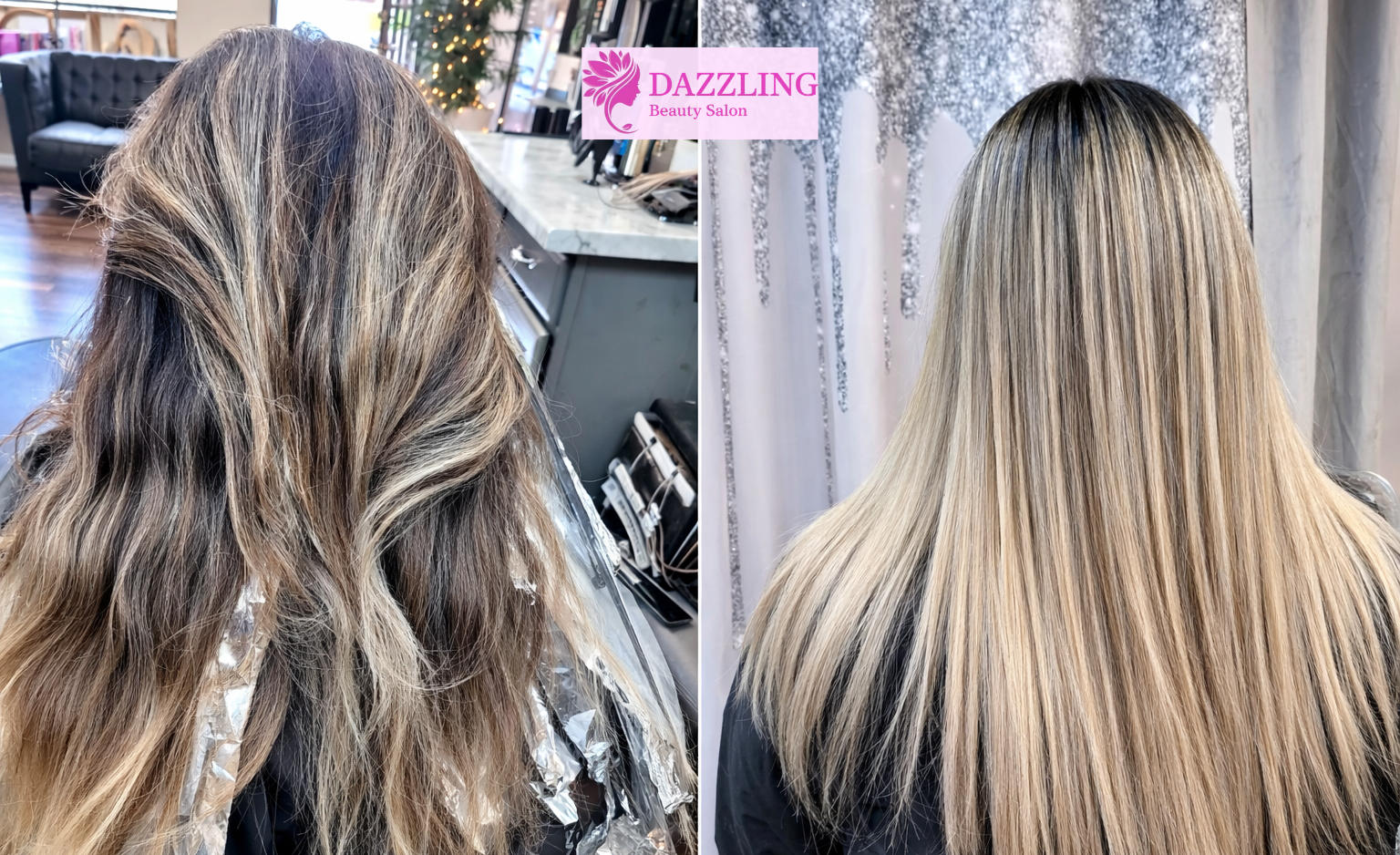
How to Fix Grown-Out Balayage Without Losing Its Natural Look
If your balayage is growing out, don't worry! When done right, it can look beautifully lived-in. But, if not managed well, it might start looking uneven or brassy. This guide will help you keep that soft, sun-kissed gradient while managing new growth and keeping your hair healthy. You'll learn about salon techniques, at-home care, and troubleshooting tips to make sure your balayage always looks intentional.
We'll share professional tips you can use right away, link to salon services that can extend your color, and point you to reliable resources for safe hair care. Whether you're trying to stretch the time between salon visits or planning a fix, these steps will help you maintain a natural-looking balayage as it grows.
If you want a hands-on solution, our stylists can help. Book a consultation for a personalized plan and in-salon treatments. For a quick color refresh, consider a targeted color touch up that blends in the regrowth without a full recolor. And for styling that enhances your hair's dimension and motion, check out our hair styling services to give your grown-out balayage an effortless look.
1. Understanding Grown-Out Balayage: What You’re Seeing and Why It Happens
What is balayage and how it differs from other techniques
Balayage is a freehand highlighting technique that creates a soft, graduated color from the mid-lengths to the ends instead of a sharp line at the roots. This look emphasizes depth at the roots and brighter pieces around the face and lengths, which naturally hides regrowth better than traditional foil highlights. Even though balayage is often seen as low-maintenance, it still needs some attention to stay polished as your hair grows.
Understanding the details of your balayage—like where highlights were placed and how much lift was achieved—is key to making informed decisions about maintenance and touch-ups. Knowing if your stylist used heavy lifting near the face or did patchy placement on the ends helps you decide when to ask for blending, glossing, or a full toning session.
Why grown-out balayage sometimes looks uneven
Grown-out balayage can look uneven due to several factors: contrast between dark roots and light ends, tone shifts like brassiness, and changes in hair texture. As your hair grows, the original gradient might lose its smooth fade and start to look like distinct color zones instead of a harmonious blend. Also, things like sun exposure, heat styling, and shampoo choice can speed up color fading, making regrowth more obvious.
Many people mistake natural regrowth for poor color work when maintaining a natural look is about managing contrast and tone intentionally, not erasing regrowth completely. Strategic root blending and glossing keep the effect consistent without losing the lived-in beauty that makes balayage so appealing.
Typical timelines and what to expect
Balayage is great because it allows for longer breaks between salon visits, with many enjoying 3–4 months between appointments, depending on the contrast and hair growth. However, timelines vary with hair texture, growth rate, and the color change applied during the original service. If you have fast-growing hair or high-contrast color, you might need touch-ups every 6–8 weeks to maintain a natural transition.
Knowing realistic timelines helps you plan. Schedule a gloss or root-blending service to refresh tone and soften regrowth at the 6–10 week mark, and book deeper corrective or color services when the contrast becomes distracting or the hair needs care.
2. Root Blending Techniques: The Salon Solutions That Keep Balayage Natural
What is root blending and how it helps
Root blending is a technique stylists use to soften the line between natural roots and highlighted lengths, creating a gradual color shift rather than a harsh regrowth band. Techniques range from gentle shadowing with a low-volume color to hair painting that reintroduces subtle highlights near the root. The goal is to preserve dimension and make regrowth look deliberate, not accidental.
Root blending is especially useful if you want to extend the life of your balayage without committing to a full recolor. It can be done quickly and usually with less bleach, which preserves hair integrity while improving the overall appearance.
Popular root blending methods
Stylists use a few main approaches: shadow roots (applying a darker glaze at the root area), partial lowlights to reduce contrast, and hand-painted root strokes that mimic natural regrowth patterns. Each method is chosen based on hair color, texture, and desired longevity. For example, shadow roots tend to be low-maintenance and disguise regrowth for longer, while delicate painted strokes work well when the goal is subtlety and naturalism.
Discuss your lifestyle and maintenance preferences with your stylist to determine which method suits you best. If you’re scheduling root blending regularly, aim for techniques that minimize processing and maximize color harmony.
How often to blend roots
Many people opt for a root-blending refresher every 6–12 weeks, depending on how much contrast they want to hide. If your hair grows quickly or you notice an unwanted line of demarcation, a 6–8 week schedule keeps hair looking intentionally lived-in. For lower-contrast balayage or those who prefer more grow-out between visits, a 10–12 week interval may be enough.
Plan root blending alongside other treatments, like a gloss or a deep conditioning session, to protect hair health and maintain shine while redistributing pigment where needed.
3. Gloss Treatments and Toners: Refreshing Color Without Heavy Processing
What gloss treatments do for balayage
Gloss treatments deposit a thin layer of color and shine without heavy lift, neutralizing brassy tones and bringing back sheen to faded highlights. Glosses can be clear to boost shine and seal the cuticle, or tinted to subtly shift tone toward cooler or warmer hues. They’re a great mid-cycle service to maintain vibrancy without bleaching or aggressive color changes.
Glosses typically last 4–6 weeks and are gentle on hair because they don’t rely on strong developers to lift pigment. Regular glossing preserves the tonal integrity of balayage and keeps the transition between root and highlight soft and natural.
Choosing the right toner or gloss
Select a gloss based on the unwanted tone you want to correct: purple or blue-based glosses remove warmth, while soft gold or honey glosses enhance warmth and depth. Your stylist will analyze your current tone and recommend a gloss that complements your base color and skin tone. For many seeking to maintain a sunlit look, a slightly warm gloss enhances dimension without creating unwanted brassiness.
Because glossing affects tone rather than lift, it’s safe to do more frequently than full color sessions. Combine glosses with bond-building treatments or conditioning masks to keep hair strong.
Frequency and cost-effectiveness of glossing
Gloss treatments are an affordable way to extend the life of balayage between major appointments. Scheduling a gloss every 6–8 weeks maintains shine and keeps tones in check, which can reduce the need for frequent lightening or color correction. Many find that adding glosses to their color schedule saves money long-term by reducing the need for more invasive correction services.
When booking, ask your salon about combo options—a gloss paired with a deep conditioning treatment can address tone and health in one visit, delivering better results than either service alone.
4. Daily and Weekly At-Home Care: Habits That Preserve Color and Health
Washing frequency and technique
Experts recommend washing color-treated hair 2–3 times per week to prevent premature color fade and retain natural oils that protect the hair. Overwashing strips pigment and moisture, making highlights lose their vibrancy and ends appear dull. Use lukewarm water when rinsing; hot water opens the cuticle and speeds up color loss.
Between washes, dry shampoo can refresh roots and extend styling life. When you do shampoo, focus on the scalp and let the suds rinse through the lengths instead of scrubbing the mid-lengths and ends, which helps preserve pigment deposited during salon services.
Choosing sulfate-free, color-safe products
Sulfate-free, color-safe shampoos and conditioners help prevent harsh cleansing agents from stripping salon-applied color. These products are gentler on the hair cuticle and often include ingredients that lock in moisture and shine. Look for products labeled "color-safe" and avoid clarifying shampoos unless you’re addressing product buildup consciously and sparingly.
Investing in professional-grade at-home products recommended by your stylist can make a big difference in how long your balayage looks fresh. If you’re unsure what to pick, consult your stylist or book a product recommendation session after an in-salon service.
Weekly treatments: purple shampoo, masks, and UV protection
Weekly treatments should include a purple shampoo (used once weekly) to neutralize unwanted warm tones for blondes and lightened mid-lengths. Purple shampoo counteracts brass by depositing violet pigments that balance orange and yellow tones, returning highlights to a cooler, fresher hue. Use it carefully—overuse can create a faint purple cast on porous hair.
Incorporate a hydrating mask or bond-building treatment weekly to replenish moisture lost through lightening and styling. Additionally, protect your hair from sun damage with UV-protectant sprays or wear a hat during prolonged sun exposure. The Centers for Disease Control and Prevention (CDC) offers clear guidance on sun protection best practices that are relevant to hair and scalp care.
5. Salon Treatments That Preserve Balayage and Hair Health
Deep conditioning and bond-building treatments
Lightening processes can weaken hair structure, so regular deep conditioning and bond-building treatments keep balayage luminous and healthy. Bond-building systems reconnect broken disulfide bonds, improving strength and elasticity, while deep conditioners replenish lipids and proteins. When used after glossing or between color services, these treatments prevent breakage and restore manageability.
Many salons offer targeted recovery plans after color services, combining bond repair with hydrating masks and low-heat blowouts to provide immediate and lasting improvements. Scheduling a repair treatment with each gloss or root blend helps balayage last longer and perform better.
Botox capilar, keratin, and smoothing options
Salon treatments like Botox capilar and keratin smoothing treatments can reduce frizz, increase shine, and improve hair texture so color looks smoother and more reflective. Botox capilar treatments restore elasticity and smooth the cuticle, improving how color sits on the hair and making regrowth less visually disruptive. Keratin treatments seal the cuticle for weeks, allowing color to remain vibrant longer while improving overall manageability.
Discuss with your stylist the timing and compatibility of smoothing services with color work; some smoothing treatments should be scheduled before or after color with a specific waiting period to ensure the best results and avoid unexpected tone shifts.
When to choose color correction vs. touch-ups
Not all grown-out balayage needs full correction. A quick color touch up or root blending session is often enough to refresh the look and blend regrowth. However, if the tone has shifted significantly (like persistent brassiness or uneven lightening) or the hair shows signs of damage from prior services, a targeted color correction and recovery plan may be necessary.
Color correction involves careful assessment of hair history and often staged services to avoid excessive processing. A professional stylist will prioritize hair health while achieving the desired visual outcome, often pairing correction with intensive restoration treatments.
6. Styling Techniques That Keep Grown-Out Balayage Looking Intentional
Haircuts and layering to disguise regrowth
Strategic haircuts and layering can help disguise regrowth by creating movement that breaks up color bands. Soft layers, face-framing pieces, and textured ends introduce dimension that complements balayage and reduces visual contrast between roots and highlights. Trims remove damaged ends and refresh the overall shape, which helps color appear more integrated.
Ask your stylist for a cut that enhances the color placement—a textured lob or layered mid-length often complements grown-out balayage and emphasizes the intentional fade of the lightened areas.
Heat styling and protective techniques
When you do heat style, use a dedicated heat protectant to minimize cuticle damage and color degradation. Excessive heat can accelerate fading and alter tone, making highlights appear dull or brassy. Low-heat styling techniques, like air-drying with a diffuser or using a straightener at moderate temperatures, extend color life while achieving polished looks.
Consider finishes that emphasize dimension—loose waves, undone braids, and textured updos showcase balayage contrast in a natural way and often require less frequent heat styling than pin-straight looks.
Extensions and styling tricks for low-maintenance days
Hair extensions can add length, volume, and blended color without additional lightening if you want to reduce the contrast caused by regrowth. Custom-matched extensions integrate with balayage tones to create a seamless, lived-in look while you stretch time between color services. Make sure extensions are color-matched and professionally installed to avoid visible mismatches.
Everyday styling tricks like messy buns, half-up styles, and face-framing braids divert attention from roots and highlight the painted pieces of your balayage. When chosen with intention, these styles make grown-out balayage look deliberate and chic.
7. Troubleshooting Common Problems and Practical Fixes
Dealing with brassiness and unwanted warm tones
If your balayage starts to look brassy, a purple or blue-based toner and/or weekly purple shampoo can neutralize warm pigments. For stubborn brass, a salon gloss or toner applied by a professional restores the desired tone without over-processing. At-home purple shampoo is effective for maintenance but should be used carefully to avoid a slight purple tint on porous hair.
When in doubt, consult a stylist for a corrective gloss rather than attempting aggressive lightening or toning at home, which can create uneven results and further damage the hair.
Fixing uneven regrowth or banding
Banding occurs when there are visible lines of demarcation or uneven lift across the lengths, often caused by prior color history. Root blending and delicate hand-painting by an experienced colorist are the most effective fixes. In some cases, a staged approach—gentle lowlights combined with selective re-lightening—achieves a seamless gradient without compromising hair strength.
A professional will assess porosity, previous color work, and hair health before deciding on a corrective plan. Avoid quick DIY fixes, which can make banding worse when done without proper technique.
When hair feels dry or compromised
Dry, straw-like ends are usually a sign that the hair needs trimming and targeted repair rather than more color processing. Schedule a deep conditioning or bond-building treatment and trim the most damaged lengths to prevent split ends from traveling up the strand. Pair salon treatments with a nutrient-rich at-home regimen to rebuild moisture and resilience.
If persistent breakage occurs, prioritize restoration and minimize chemical processes until the hair regains strength. A staged recovery plan often includes regular masks, reduced heat styling, and a series of professional reparative treatments.
8. A Practical Maintenance Plan and FAQ to Keep Balayage Natural
Sample three-month maintenance roadmap
Month 1: After-color care—wait 48–72 hours before your first wash, then use sulfate-free products and a heat protectant for styling. Schedule a hydrating mask or bond-repair treatment two weeks after your color appointment to lock in shine and strength.
Month 2: At-home maintenance—wash 2–3 times weekly, use purple shampoo once if needed, and refresh your look with a light gloss or at-home color-safe finishing oil. Consider a shallow root blend if you notice the first signs of a harsh line of demarcation.
Month 3: Salon refresh—plan a gloss, root-blending session, or targeted color correction if tone has drifted. Add a restorative treatment like Botox capilar or a bond-building service to maintain health and shine going into the next cycle.
FAQ: Quick answers to the most common questions
How often should I wash my hair? Aim for 2–3 times per week. Overwashing accelerates color fade and strips natural oils that protect hair structure. Use dry shampoo between washes to keep roots fresh and reduce the need for frequent washing.
What if my balayage looks brassy? Use purple shampoo weekly and book a salon gloss to neutralize warm tones. If brassiness persists, a professional toner can adjust your palette without further lightening.
How can I protect my hair from sun and environmental damage? Wear a hat or use UV-protectant hair products when exposed to strong sunlight. The U.S. Food and Drug Administration also provides guidance on cosmetic safety that may be helpful when choosing hair products (FDA cosmetics information).
When to book a professional consultation
Book a professional consultation if you notice significant brassiness, banding, breakage, or if you’re considering a dramatic tone change. A consultation allows your stylist to review your hair history, measure porosity, and recommend a staged plan that protects hair health while achieving the visual goals. Early intervention often prevents more intensive corrective services later.
At Dazzling Beauty And Barbershop, our stylists create personalized maintenance plans that balance aesthetic goals with hair integrity. If you want a proactive approach, schedule a consultation to map out the right blend of salon services and at-home care.
9. Local Considerations: Caring for Balayage in Austin’s Climate
How Austin humidity affects color and texture
Austin’s humidity can amplify frizz and open the hair cuticle, making color fade faster and highlights look less defined. High humidity increases porosity and leaves hair more susceptible to environmental discoloration and texture changes. A humidity-conscious care routine is essential for maintaining balayage in Central Texas.
Include smoothing treatments and moisture-sealing glosses in your maintenance plan to counteract humidity. Products formulated to resist frizz and lock in moisture will preserve tone and shine longer in humid conditions.
Salon services tailored for local clients
Local salons in Austin often offer humidity-resistant gloss treatments and customized maintenance plans that factor in seasonal climate changes. These services may include more frequent glossing in summer, bond-building treatments after pool exposure, and targeted trims to remove humidity-damaged ends. Ask your stylist for a climate-aware regimen that schedules treatments around Austin’s weather patterns.
For clients in Austin who want quick refreshes, our salon offers targeted color touch ups and smoothing options that help balayage withstand seasonal humidity while keeping the look natural and lived-in.
Real-world example: client results in Austin
One local client experiencing rapid regrowth opted for a root-blending appointment every four weeks combined with a gloss and hydrating mask. This approach maintained a seamless transition between natural roots and painted lengths, and minimized the need for heavy lightening. The combination of in-salon treatments and a tailored at-home routine helped the client stretch their main color appointment to four months while keeping hair healthy and vibrant.
10. Final Checklist and Call to Action
Practical checklist to fix and maintain grown-out balayage
- Assess the level of contrast and tone shift before deciding on a touch-up vs. correction.
- Book root blending or a gloss at the first sign of an obvious demarcation line.
- Wash hair 2–3 times weekly and use sulfate-free, color-safe products.
- Use purple shampoo weekly for brass control (only as needed).
- Schedule periodic bond-building or deep-conditioning treatments to maintain hair health.
- Choose cuts and styles that add movement to disguise regrowth.
- Protect hair from sun and heat with UV protection and heat protectants.
When to call a professional instead of DIY
If you’re dealing with extensive brassiness, banding, or breakage, avoid DIY corrections and see a professional colorist. Complex issues require a careful assessment of hair history, porosity, and prior chemical treatments; a stylist can propose a staged correction that prioritizes hair health. DIY attempts at aggressive toning or layered lightening often make the problem worse and increase the need for recovery services.
Ready to refresh your balayage the natural way?
If you’re in Austin and ready to restore that soft, sun-kissed gradient without losing the lived-in charm, our team at Dazzling Beauty And Barbershop can help. We offer personalized consultation, root blending, gloss treatments, reparative services like keratina and Botox capilar, and targeted touch ups to keep your balayage looking effortless between full color appointments. For a professional refresh or a custom maintenance plan, call (512) 762-8555 or email info@theaustinhairsalon.com to schedule your appointment.
Frequently Asked Questions (Expanded)
How long can I realistically go between touch-ups?
Most people can go 3–4 months between full color appointments if the balayage was applied with low contrast and proper glossing. If you prefer less contrast near the root, root blending or shadow root services every 6–12 weeks help sustain the look without a full recolor. Your stylist can create a timeline that fits your hair growth and personal preferences.
Will glossing make my color look darker over time?
Glossing deposits subtle pigment that can slightly deepen tone but is primarily used to refresh tone and add shine rather than significantly darken hair. Regular, correctly formulated glosses keep tones vibrant and reduce the need for corrective lifting or heavy toners. Always discuss the desired outcome with your stylist to ensure the gloss complements your base rather than altering it dramatically.
Are at-home kits safe for fixing grown-out balayage?
At-home kits can be useful for minor root coverage or tone adjustments, but they carry risks for uneven results or unexpected color shifts on previously lightened hair. For grown-out balayage where tone and health are considerations, professional services are recommended because stylists can match pigments, assess porosity, and protect hair integrity. If you use at-home products, stick to professional-grade, color-safe items recommended by your stylist.
For more tips on haircut choices that complement color, read our related guide on choosing the perfect cut for your face at expert guide to choosing the perfect haircut. For prevention-focused advice on avoiding bleaching mistakes, see our post on avoiding common dye and bleach errors at avoiding common color mistakes.
References and Further Reading
For background on balayage and hair coloring concepts, see the general overview on Wikipedia: Hair coloring — Wikipedia. For authoritative guidance on product safety and cosmetic information, refer to the U.S. Food and Drug Administration: FDA cosmetics information. For sun safety and environmental protection practices relevant to preserving hair color, consult the Centers for Disease Control and Prevention: sun protection guidance — CDC.
Maintaining grown-out balayage is a balance between professional care and informed at-home habits. With root-blending techniques, glossing, regular conditioning, and smart styling, your balayage can remain natural, vibrant, and healthy as it grows. Ready to start a custom plan? Contact Dazzling Beauty And Barbershop to book your consultation and keep your color looking intentionally beautiful.