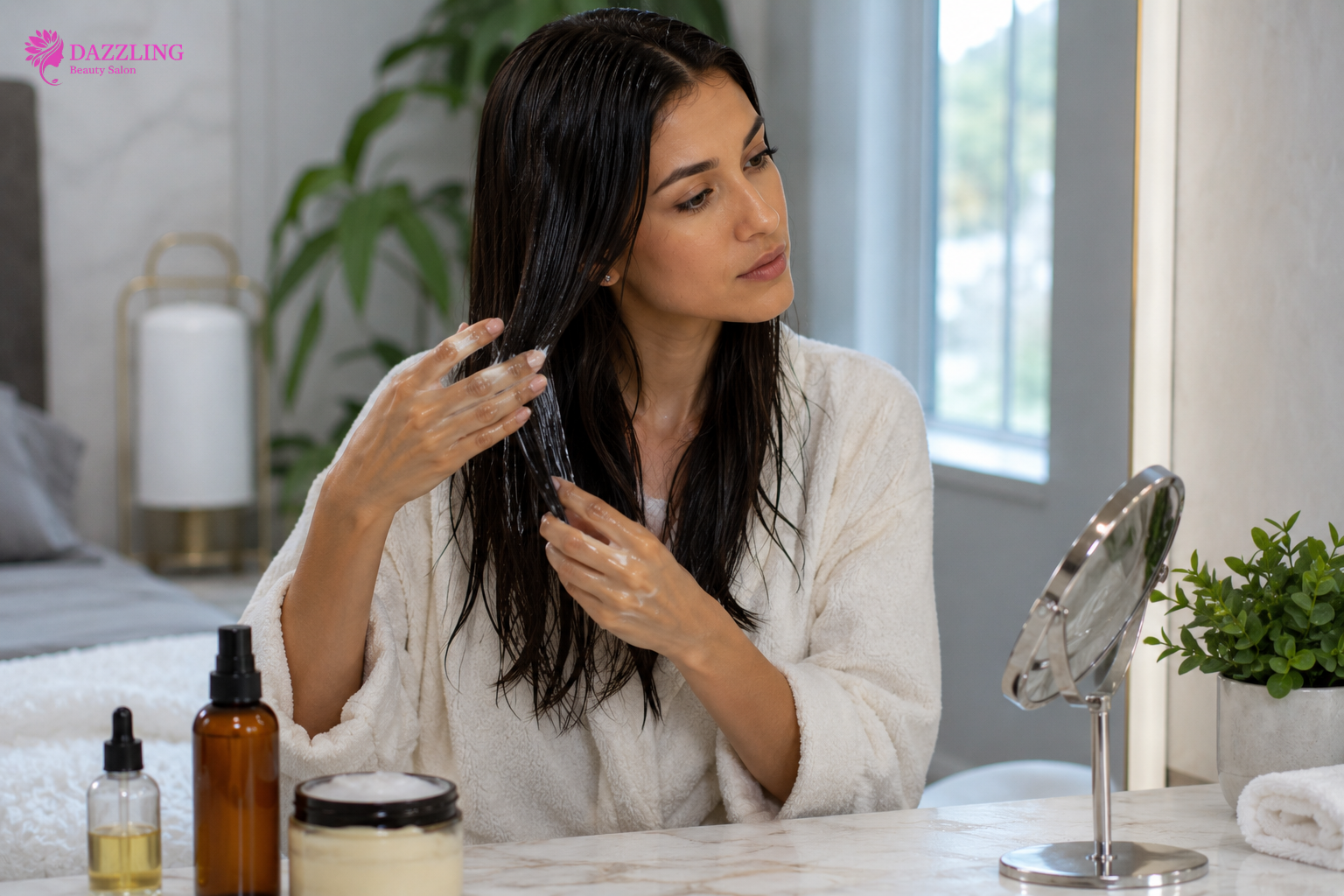
Keep Your Hair Happy Between Salon Visits
Want your hair to look fabulous between salon visits? It’s easier than you think. A good home routine can keep your hair soft, shiny, and manageable, making your salon visits feel more worthwhile. If you regularly get hair styling, color touch-ups, or a fresh haircut, maintaining your hair at home can extend those stunning results.
Hair care has come a long way from just shampoo and conditioner. Now, we have scalp sprays, dry shampoos, and deep conditioning treatments that keep hair looking its best between washes. Overwashing and too much heat can dry out and damage hair, so it’s important to find a balance in your routine. Our scalp health guide offers more tips on this.
In this guide, we’ll dive into easy routines, expert tips, product recommendations, and habits that keep your hair looking salon-fresh. We’ll cover everything from cleansing and conditioning to heat protection and color care. You’ll also see how treatments like keratin and Botox capilar can keep your hair smoother for longer.
Why Your Hair Needs Extra Love Between Salon Visits
Salon Treatments Are Great, But Daily Life Takes a Toll
Even the best salon treatments face daily challenges like sun, friction, humidity, and styling tools. Maintaining your hair isn’t just about looking good—it’s about keeping it healthy. If your hair loses its shine after a few weeks, your routine might need a tweak rather than a complete overhaul.
The goal is to make your salon results last without making your hair feel heavy or overstyled. This is especially important after coloring, as harsh routines can speed up fading and dryness. Interested in keeping your color vibrant? Check out our guides on color correction and low-damage highlighting techniques.
Washing Too Much Strips Natural Oils
Your hair produces natural oils that keep it soft and flexible. Washing too often can strip these oils, making your hair dry and frizzy. Instead of washing every day, find a balance that works for your hair type, whether it's curly, color-treated, or chemically processed.
Stylists often recommend washing two to three times a week. This doesn’t mean you have to put up with greasy roots between washes. Dry shampoo and lightweight scalp sprays can help refresh your look without a full wash. These small changes can make a big difference in how long your style lasts.
Build a Smart At-Home Hair Care Routine
Pick a Gentle Cleansing Routine
Healthy hair starts with cleansing that removes buildup without drying hair out. Sulfate-free shampoos are great for colored or frizzy hair because they are gentler. If your scalp gets oily quickly, focus the shampoo on your roots and let it cleanse your lengths as you rinse.
For a salon-quality cleanse at home, try our salon shampoo service. While washing, use your fingertips to massage your scalp and avoid using hot water. Gentle handling can help prevent hair shaft damage. The National Institutes of Health suggests that chemical and physical stress are the top contributors to hair damage.
Condition With Purpose
Apply conditioner where it’s needed most—usually mid-lengths and ends. If your hair is fine, a lightweight conditioner might be enough. For thick, curly, bleached, or color-treated hair, opt for something richer.
Deep conditioning treatments are perfect for dry or color-processed hair. Many modern formulas include ingredients like ceramides and shea butter to boost softness and shine. Weekly treatments can help maintain vivid color, keeping your hair healthy between hair dye appointments and gray hair touch-ups.
Use Leave-In Products When Needed
Leave-in conditioners and detangling sprays help maintain moisture and manageability. They’re great for air-drying or reducing friction from styling tools. The goal is to prevent tangles before they become a problem.
If you’re unsure about your hair’s moisture needs, watch how it feels after washing. If it’s dry or difficult to brush, you might need more hydration. For more on moisture balance, check out our hair porosity guide.
Refresh Your Hair Without Overwashing
Dry Shampoo: Your Best Friend
Dry shampoo is amazing for absorbing oil and reviving your roots without a full wash. It’s especially useful for preserving blowouts, curls, or smoothing services. Who What Wear highlights that hair refreshers are great for oil control and adding a fresh scent.
Apply dry shampoo before your hair looks greasy. Spray it at the roots, wait a minute, then massage it in or brush it through. Use it sparingly to avoid buildup.
Try Styling Mists and Scalp Sprays
Hair refreshers aren’t just for oil. Styling mists can revive your hair’s shape and add softness. Scalp sprays soothe irritation, especially in dry weather or after heat styling.
These tools make hair care easier and less frequent, helping you maintain salon results longer.
Protect Your Hair Overnight
What you do at night also affects your hair. A silk or satin pillowcase reduces friction, and a loose braid or silk scrunchie can prevent tangles. This is great for long hair, extensions, or styled waves that flatten overnight.
If your hair gets messy quickly, consider a style that’s easy to refresh at your next appointment. Our hair extensions and styling services can help you look polished and longer.
Avoid Heat Damage and Styling Stress
Use Heat Tools Wisely
Flat irons and blow dryers are handy, but they can stress your hair over time. To keep your hair healthy, use these tools less often and more carefully. Let your hair air-dry partway, use lower heat settings, and avoid repeatedly styling the same section.
If your hair is already fragile, treatments like Botox capilar or keratin may help reduce your need for heat styling.
Heat Protectant Is a Must
Heat protectant shields your hair from high temperatures. It helps retain moisture and reduces the impact of heat. Apply it evenly, especially on the mid-lengths and ends, to keep your hair looking salon-fresh.
If you frequently use heat tools, think of heat protectant as a daily necessity. For more on avoiding damage during coloring, check out our expert tips.
Keep Styling Gentle
Tight ponytails and rough brushing can damage your hair over time. Opt for low-tension styles to avoid breakage and maintain your hair’s health.
If you need a polished look, ask for a style that lasts without constant adjustments. Pair lower tension habits with a professional hair styling appointment for an easier-to-maintain look.
Take Care of Color-Treated Hair
Choose Products for Color Care
Color-treated hair benefits from extra attention. Sulfate-free shampoos and conditioners help maintain vibrancy. Whether your hair is blonde, brunette, or gray-blended, choose color-safe formulas.
Color maintenance is about preserving tone, shine, and softness. Align your home routine with your next color touch-up appointment for best results.
Watch Out for Hard Water
Hard water can dull your hair, while sun exposure can dry it out. In hot climates, these issues are more noticeable. Consider clarifying treatments as needed.
In Austin, salons often tailor aftercare based on local weather and lifestyle. This is why a personalized consultation can be valuable, especially after color correction or customized blends. For guidance on beauty product safety, visit the Consumer Product Safety Commission.
Deep Condition After Chemical Services
Bleaching and repeated color services can make hair thirsty. Weekly deep conditioning helps restore softness and flexibility. Modern formulas are designed for processed hair, and Marie Claire highlights the demand for these products.
Apply deep conditioner after cleansing and leave it on for the recommended time. Consistent use is more effective than sporadic application.
Trim, Detangle, and Prevent Breakage
Regular Trims Maintain Hair Shape
Trims are important, even if you’re growing your hair out. Split ends don’t heal themselves and can make your hair look less polished. Trimming every 8 to 12 weeks is a good rule of thumb.
For more on timing, check out our article on trimming. Neat ends style more easily and look better.
Detangle from Ends to Roots
Start detangling from the ends, working your way up. This reduces snapping and stress on your hair. Use a wide-tooth comb or flexible brush.
After washing, detangle while your hair is still slippery from conditioner. If your hair knots often, it might need more moisture or a trim. Consider a haircut or trim to reset the shape.
Be Mindful of Friction
Breakage often results from repeated stress. Use microfiber towels, soft scrunchies, and smooth clips to protect your hair.
This is especially important for extensions or color-treated hair. Lowering friction helps preserve your style and keeps your hair looking healthy.
Listen to Your Hair and Adjust
Dull Hair May Need a Refresh
If your hair loses shine, it might be from product buildup or dehydration. A gentle clarifying treatment can help, but don’t overdo it. Pay attention to how your hair reacts to find the right balance.
If your style falls flat, you might need to review your product mix. A balanced routine usually beats relying on a single “miracle” product.
Frizz Could Mean Your Hair Needs More Moisture
Frizz can be caused by humidity, dryness, or styling damage. If your hair is dry and frizzy, try a richer conditioner. If it’s overhydrated and limp, use lighter formulas.
Professional smoothing options like Botox capilar or keratin can help manage frizz, but at-home care is just as important.
Breakage Means It’s Time to Simplify
If you notice broken pieces or shedding, your routine might be too harsh. Try lowering the heat, washing less often, and detangling gently. Overly complex routines can sometimes create more problems.
A salon consultation can help identify what your hair needs, whether it's moisture, protein, or a different schedule. Pairing your routine with services like color correction can make a noticeable difference.
A Sample Weekly Routine for Healthy Hair
A Simple Routine for Most Hair Types
- Wash day one: Cleanse gently, condition mid-lengths to ends, detangle carefully, and apply a heat protectant if styling.
- Midweek refresh: Use dry shampoo or a scalp spray, then smooth the lengths with a light leave-in if needed.
- Wash day two: Repeat a gentle cleanse and consider a deep conditioning treatment if hair feels dry.
- Weekend maintenance: Trim split ends if needed, protect hair at night, and keep tension low in styles.
This routine is flexible because hair needs change. During humid months, you may need more smoothing. In dry seasons, richer conditioning helps. Consistency is key, but be adaptable.
Tailor Your Routine to Your Recent Services
If you recently had a color service, focus on gentle cleansing and color-safe products. After a haircut, aim to protect the shape and prevent frizz. If you have extensions, prioritize slip and low-tension styling. Explore options like hair extensions or hair dye for your next look.
A client success story from Dazzling Beauty Salon shows how switching to sulfate-free cleansing, weekly deep conditioning, and regular trims improved shine and reduced fading for a color-treated client. Supporting your salon service with the right home routine can lead to fantastic results.
Your Questions About Healthy Hair Between Salon Visits
How Often Should I Wash My Hair?
Most people do well washing two to three times per week, but it depends on your scalp, hair texture, and lifestyle. If you exercise a lot or have an oily scalp, you might need a different schedule. Avoid washing so often that you strip your natural oils.
What Products Are Best for Color-Treated Hair?
Look for sulfate-free shampoos, moisturizing conditioners, leave-in products, and weekly deep conditioning treatments. If your hair is bleached or highlighted, choose products designed for color-treated hair to maintain vibrancy and reduce dryness.
How Can I Protect My Hair from Heat Damage?
Use heat tools less often, keep temperatures moderate, and always apply heat protectant. Let hair air-dry partway when you can, and avoid repeated passes with hot tools. If you rely on heat daily, consider a smoothing service that makes styling easier and less frequent.
When Should I Book My Next Salon Visit?
Book your next visit when you notice faded tone, uneven shape, split ends, or a style that doesn’t behave as it should. Many clients benefit from trims every 8 to 12 weeks, though some services may need different timing. Your stylist can help you build a maintenance calendar.
Keep Your Hair Looking Great with the Right Routine
Keeping your hair healthy between salon visits is about finding a routine that protects moisture, reduces breakage, and preserves color. When you combine smart cleansing, targeted conditioning, gentle heat use, and regular trims, your hair stays in better shape for longer.
Successful clients listen to their hair. When it feels dry, they add moisture. When it gets oily, they refresh it gently. When the ends look tired, they trim. This pattern creates long-term results that are easier to maintain than constant fixes.
If you’re ready to make the most of your salon results, consider pairing your home routine with expert care from Dazzling Beauty Salon. Whether you need a refresh, a trim, a color service, or a smoothing treatment, we can help create a plan that fits your hair and lifestyle. Visit our website or contact us to book your next appointment and keep your hair looking its best between visits.
Call today and let’s build a routine that keeps your hair healthy, polished, and salon-fresh longer.