Expert Guide to Hair Porosity and Better Product Absorption
Hair porosity is a key player in the world of hair care, but it often goes unnoticed. It explains why a product might work wonders for someone and do nothing for someone else. Simply put, porosity is about how easily your hair soaks up and holds on to moisture. This depends on the state of the cuticle, which is the outer layer of your hair. Knowing your porosity level can help you make smarter picks when it comes to shampoos, conditioners, masks, oils, and styling products. This leads to better hydration, less buildup, and results you can count on.
This guide lays out how porosity impacts product absorption, why it matters for your daily routine, and how salons can tailor care based on your hair's texture and damage. You'll also learn how porosity can change over time, the latest on cuticle damage, and how to craft a routine that fits your hair goals. For those craving a more personal touch, a salon visit with services like gentle shampoo treatment or professional hair styling can give you insights into how your hair reacts to moisture and finishing products.
Hair experts are increasingly recommending porosity-based routines because they work better than the one-size-fits-all approach. This shift follows a wider beauty trend towards personalized care, as people look for products and services that match how their hair behaves, not just how it looks. According to the American Academy of Dermatology, the structure and damage of the hair shaft are big factors in how hair responds to moisture and heat. Porosity is crucial for any hair-care strategy. You can learn more about hair structure and healthy hair practices through the American Academy of Dermatology.
What Hair Porosity Actually Means
The Role of the Hair Cuticle
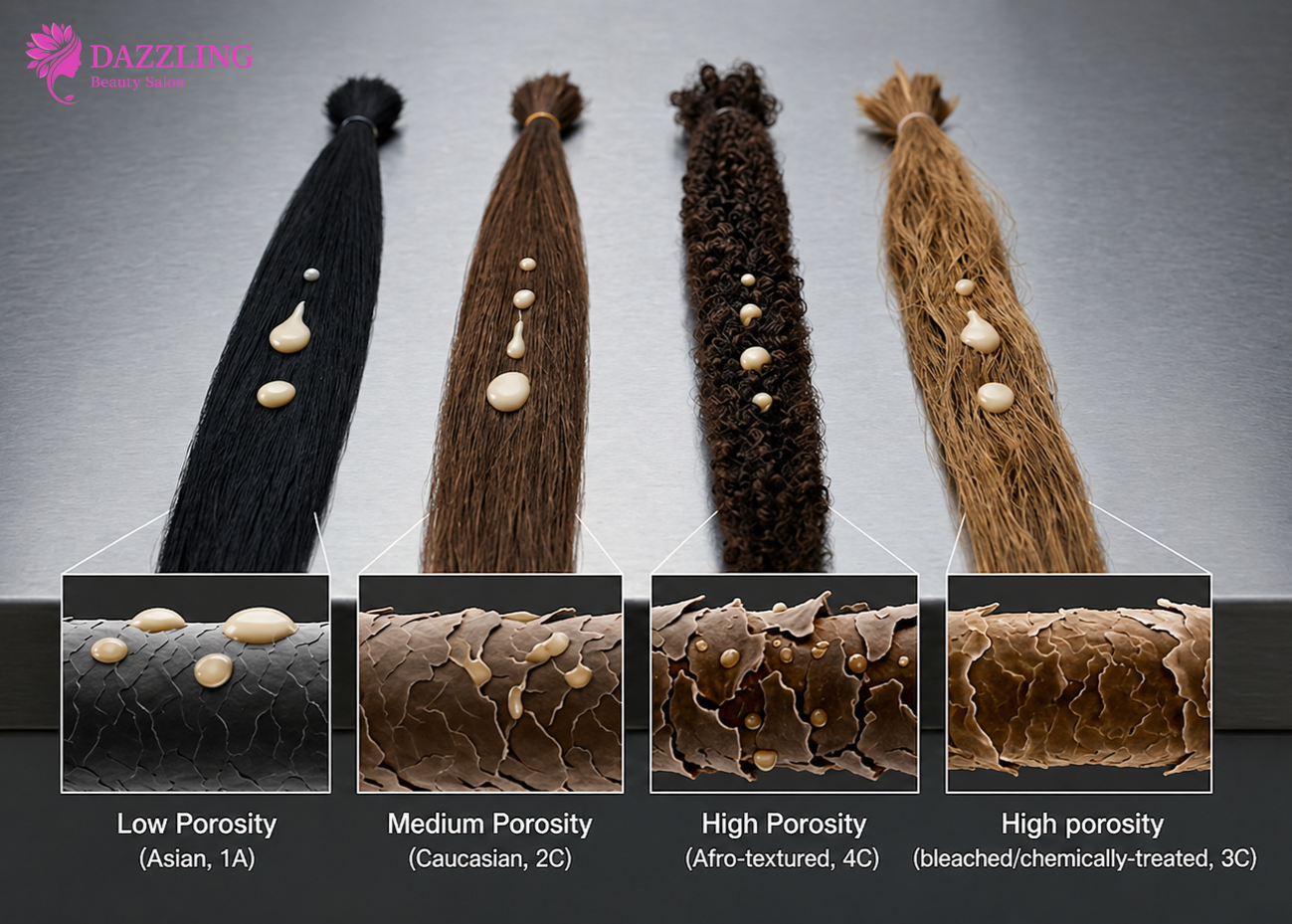
Hair porosity depends on how tightly or loosely the cuticle layers lie flat along the hair shaft. If the cuticles are compact and smooth, moisture and products struggle to get in, which is typical of low-porosity hair. When the cuticles are more open, moisture gets in easily but also escapes quickly, common in high-porosity hair. Medium-porosity hair is in between and usually absorbs and retains moisture without much fuss.
This cuticle setup affects how long you need to leave conditioner on your hair and whether a leave-in cream gets absorbed or just sits on the surface. It also explains why some folks feel their hair is always dry, even with regular oil use. If the cuticle is too tight, products may sit on top; if it's too open, moisture may vanish before the hair benefits from it. For more on how hair health connects to scalp and strand care, check out our scalp health guide.
Why Porosity Isn't the Same as Texture
It's easy to mix up porosity with curl pattern, thickness, or density, but they're different. Curly hair often has higher porosity because the bends make cuticles more damage-prone, but straight hair can also be low or high porosity based on genetics, heat styling, or chemical processing. This explains why two people can both have wavy hair yet need different product routines.
When salons get this difference, they can suggest products and treatments that truly work. For instance, someone with low-porosity hair might do better with lightweight, water-based products and clarified cleansing, while someone with high-porosity hair might need richer creams or sealing oils. This is similar to personalized services like color correction and keratin smoothing treatment, where the stylist assesses the hair's condition before creating a plan.
Why Porosity Changes Product Absorption
Low-Porosity Hair and Moisture Resistance
Low-porosity hair often resists water and product absorption because the cuticle layers are tightly packed. This can make wash day a hassle—conditioner might feel like it's just sitting on the hair, and styling products can build up fast. In these cases, heat, steam, or warm water can help open the cuticle to improve absorption, but the product itself should also be lightweight so it doesn't weigh the hair down.
Experts, including trichologist Kerry E. Yates, note that low-porosity hair often struggles with buildup and reduced product effectiveness. This means you might use plenty of products and still feel dry because moisture isn't fully entering the shaft. A practical solution is using clarifying care every so often, choosing humectant-rich formulas carefully, and avoiding too many creams. If your routine feels heavy or sticky, a professional salon shampoo service can help reset the hair and improve how later products behave.
High-Porosity Hair and Fast Moisture Loss
High-porosity hair soaks up water quickly, but that doesn't mean it stays hydrated. Because the cuticle is more open, moisture can escape as fast as it enters. This is common in hair that's been colored, bleached, relaxed, heated frequently, or exposed to stress like sun, wind, and pollution. In these cases, choosing products that focus not only on hydration but also on sealing and protection is key.
Research in the journal Cosmetics shows that chemical and physical damage can change hair porosity and affect both permeability and mechanical properties. In other words, the more the cuticle is compromised, the more the hair behaves like a sponge with holes: it soaks up water quickly, then loses it just as fast. That's why rich conditioners, bond-supportive treatments, and sealing finishers are vital for high-porosity strands. For related help, our Botox capillary treatment can support smoother texture and shine when frizz and roughness are part of the problem.
Medium Porosity as the Balanced Middle Ground
Medium-porosity hair usually lets moisture in and keeps it there without much trouble. This often makes styling easier because products absorb predictably and the hair stays manageable longer. Still, medium porosity can shift toward low or high over time with repeated heat styling, coloring, or sun exposure. So, even if you feel your hair is "normal," you should watch for changes.
A balanced routine for medium-porosity hair usually includes a gentle cleanser, a moisturizing conditioner, occasional protein support, and a lightweight sealant if needed. The key is consistency without overloading the hair. If your hair starts feeling dry at the ends or limp at the roots, that might be a sign your porosity is changing, and your products need adjusting.
How to Tell What Your Hair Porosity Is
Simple At-Home Observations
There are easy ways to estimate porosity at home, though they're not perfect. One popular method is the float test—place a clean strand of hair in water to see if it sinks quickly, floats, or stays in the middle. While many use this as a starting point, it shouldn't be considered a definitive diagnosis because hair cleanliness, product residue, and strand shape can all affect the result.
A more reliable approach is to observe how your hair behaves daily. Does it take a long time to get wet in the shower? That may suggest low porosity. Does it dry fast after washing and seem thirsty again soon after styling? That may point to high porosity. Does it respond well to most products without much trouble? Medium porosity is likely. If you're unsure, a salon consultation can give a more accurate read, especially when paired with a cut, color service, or styling assessment.
Professional Evaluation Gives Better Results
Stylists and trichologists look at more than just a strand test. They check for elasticity, shine, roughness, color fade, frizz level, and how the hair reacts to water and product application. A professional can also determine whether the issue is truly porosity or if buildup, scalp imbalance, or breakage is causing the symptoms. This is important because the wrong diagnosis can lead to buying products that don't solve the real problem.
For instance, someone who thinks their hair is low porosity might actually have buildup from heavy products, while someone who thinks their hair is high porosity might really be dealing with structural damage from bleach. In a salon setting, a stylist can help decide whether a treatment like color touch-up, hair dye, or a moisture-focused service is the better choice. That's how a personalized plan creates better results than guessing at home.
Current Trends in Porosity-Based Hair Care
Personalized Routines Are Becoming the Norm
One of the strongest trends in hair care is personalization. Brands now create products for low-, medium-, and high-porosity hair, and people are increasingly interested in formulas that match their hair's behavior instead of just their curl type. This approach is handy because it reduces trial and error and helps you choose products that fit your actual moisture needs. In practical terms, it means fewer wasted purchases and better outcomes after each wash day.
Technology is also playing a role. Porosity testing tools, digital hair analyses, and consultation apps are more common in salons and retail environments. These developments help people better understand why certain masks or creams may not be working. Salons that keep up with these trends can offer more precise guidance, especially when paired with customized services like hair extensions or women’s haircut services, where the condition of the natural hair matters just as much as the final style.
Ingredient Awareness Is Shaping Buying Decisions
Customers are now paying closer attention to ingredients like glycerin, aloe, coconut oil, ceramides, amino acids, and hydrolyzed proteins. While no single ingredient is perfect for everyone, porosity helps explain why some ingredients feel great on one hair type and overwhelming on another. Low-porosity hair often prefers lighter humectants and water-based formulas, while high-porosity hair may need richer emollients and stronger sealing agents.
This ingredient-first mindset is a big shift from older routines that focused mainly on fragrance or brand familiarity. Today, shoppers want to know how a product behaves on the hair shaft. That's a healthier and more informed way to shop, especially when paired with expert advice from salon professionals who understand how porosity and product layering interact.
Best Products and Techniques for Each Porosity Type
Low-Porosity Hair Care Strategy
Low-porosity hair usually does best with lightweight formulas that don't pile up on the strand. Think water-based leave-ins, light creams, liquid moisturizers, and occasional clarifying cleansers to remove residue. Adding gentle heat during deep conditioning can also improve absorption because warmth helps the cuticle loosen slightly. The goal is to help moisture enter without overwhelming the hair with heavy oils too soon.
A common mistake is using too many rich butters and dense oils at once. Those products can create buildup and make low-porosity hair feel dull or greasy. Instead, focus on clean hydration, moderate conditioning, and regular reset washes. If you want a fresh start, a salon wash service followed by a lightweight styling routine can make a noticeable difference in how your hair looks and feels.
High-Porosity Hair Care Strategy
High-porosity hair usually benefits from more moisture, more slip, and stronger sealing. Deep conditioners, leave-ins, creams, and oils can help hold water inside the shaft longer. Protein treatments may also be useful when the hair feels too soft, stretchy, or fragile, but they should be used thoughtfully so the hair doesn't become stiff. The best results usually come from balancing hydration and strengthening rather than chasing one or the other exclusively.
Because high-porosity hair loses moisture quickly, styling products should help create a protective barrier. This can include curl creams, anti-frizz serums, and finishing oils applied to damp hair. If your hair has been lightened or chemically processed, professional support, such as color correction or a smoothing treatment, may improve the surface condition that makes porosity harder to manage. In many cases, better hair care starts with repairing the root cause of damage, not just masking the symptoms.
Medium-Porosity Hair Care Strategy
Medium-porosity hair often responds well to flexible routines. It usually tolerates a wider range of products, so the focus should be on consistency and maintenance. A balanced cleanser, moderate conditioner, a leave-in, and an occasional mask are often enough to keep the hair healthy. If you add too many products, you may create unnecessary buildup; if you skip moisture entirely, the hair can gradually drift toward dryness.
For medium-porosity hair, the best plan is often seasonal adjustment. Warmer months may call for more hydration and humidity control, while cooler months may require richer creams and more sealing. That kind of flexible strategy helps keep the hair predictable, manageable, and healthy-looking over time.
How Chemical and Environmental Damage Change Porosity
Heat, Bleach, and Color Services
Chemical treatments are among the biggest factors that can increase porosity. Bleach, permanent color, relaxers, and frequent high-heat styling all alter the cuticle and make the strand more porous. This can be helpful when you want color to penetrate, but it also means the hair may lose moisture faster and become more fragile. That's why aftercare is so important after any major chemical service.
According to research in Cosmetics, damaged hair changes not only in permeability but also in mechanical strength. That means the strand may be more vulnerable to breakage, roughness, and split ends. After coloring or lightening, it's smart to use supportive products and avoid repeated processing too soon. Services like gray hair touch-up and color touch-up should be planned with hair health in mind so the cuticle isn't pushed beyond its limit.
Weather, UV Exposure, and Daily Wear
Environmental exposure also affects porosity over time. Sun, humidity, dry air, pollution, and wind all place stress on the cuticle. In a climate like Austin’s, hair may experience fluctuating moisture conditions that encourage frizz, dryness, or faster fading of color. Even if you avoid chemical treatments, everyday exposure can slowly make the hair more porous and harder to manage.
That's why protective styling, hats, UV-aware products, and regular trims matter. Dry ends and split ends can behave like high-porosity sections even when the rest of the hair is relatively healthy. If you want to improve overall manageability, combining porosity-aware routines with a shape-maintaining haircut, such as our women’s haircut or men’s haircut, can help reduce the appearance of damage and simplify styling.
Salon Advice for Better Moisture Retention
Why Consultations Matter
A salon consultation is one of the easiest ways to get a more accurate picture of your hair porosity and product needs. A stylist can examine the cuticle condition, ask about your routine, and identify whether your hair is dry because it lacks moisture, because it has buildup, or because it's overprocessed. This prevents the common mistake of buying products that treat the symptom but not the cause.
For clients with curls, waves, or color-treated hair, a personalized plan is especially valuable. A stylist can recommend when to clarify, when to deep condition, and when to switch to lightweight products or richer creams. In Austin, salons that specialize in texture and customized care are well-positioned to help clients build a routine that supports both style and health. If you want a broader beauty refresh, pairing hair care with services like styling or makeup can create a polished final look without compromising hair health.
Matching Treatments to Your Hair’s Condition
Porosity-aware salon services should always begin with a simple question: What does the hair need most right now? If the answer is hydration, the stylist may use a moisture mask or a smoothing treatment. If the answer is repair, protein, or strengthening services may be added. If the answer is balance, the salon may suggest a reset wash and a lighter leave-in routine rather than a dramatic treatment.
This is where expert judgment matters. A heavy product may seem luxurious, but it can be wrong for low-porosity hair. A lightweight spray may feel perfect for fine hair, but fail to seal in moisture for highly porous strands. Matching the treatment to the strand condition is the difference between temporary shine and real long-term improvement.
Common Questions About Hair Porosity
Can Hair Porosity Change Over Time?
Yes, hair porosity can change over time. Age, coloring, heat, sun exposure, and repeated manipulation can all make the cuticle tighter or more open. This is why a routine that worked two years ago may no longer produce the same results. The good news is that while you can't change your natural genetics, you can improve how your hair behaves by reducing damage and choosing better products.
When porosity changes, your hair may suddenly feel drier, frizzier, flatter, or less responsive to products. That's a signal to reassess your routine. Sometimes a simple switch in cleanser or conditioner is enough; in other cases, a more structured repair plan is needed. If the change came after coloring or heat styling, a professional service can help restore a healthier balance.
What Is the Fastest Way to Improve Product Absorption?
The fastest improvement usually comes from clarifying buildup, using warm water during cleansing, and applying products to damp hair. Those steps help products spread more evenly and penetrate more consistently. Leaving too much residue on the hair can create a barrier that blocks absorption, especially for low-porosity strands.
It also helps to simplify your routine. Too many layers can make it harder to tell what is actually helping. Start with a cleanser, a conditioner that matches your porosity, and one leave-in or styling product, then observe how the hair responds for a few wash cycles before adding more.
How Should I Care for Damaged High-Porosity Hair?
Damaged high-porosity hair usually needs a mix of moisture, strengthening, and protection. Use a gentle shampoo, a rich conditioner, and a leave-in that helps seal the cuticle. Reduce heat styling, trim split ends regularly, and consider treatments that smooth the hair surface without making it heavy. The goal is to slow moisture loss while making the hair easier to handle.
If the hair has been chemically processed, it may need a longer recovery period than you expect. Be patient and consistent. Products will work better when the strand is not constantly re-damaged. That's why pairing home care with salon support often delivers the best results.
Building a Porosity-Friendly Routine That Lasts
Start with Observation, Not Assumptions
The best hair routines begin with what your hair is actually doing, not with what a label says it should be. Notice how long it takes to get wet, how fast it dries, whether products sit on top, and whether your hair feels dry or greasy by the next day. These observations are often more useful than a single online quiz or test.
Once you know your likely porosity, choose products that fit the hair’s needs and evaluate the results over several washes. Good hair care is iterative. You may need to refine your routine as the seasons change, as your color changes, or as your hair grows out from past damage.
Use Salon Support Strategically
Salon services can help support your porosity routine when they are chosen intentionally. A good shampoo service can remove buildup, a smoothing treatment can reduce frizz and surface roughness, and a well-planned haircut can make porous ends easier to manage. If your hair is more fragile than usual, it may be a sign that a professional touch will save time and prevent further damage.
At Dazzling Beauty and Barbershop, the goal is to help clients understand what their hair needs so they can maintain results at home. Whether you are trying to improve moisture retention, refresh color, or simply make daily styling easier, porosity-aware care can make a major difference in how your hair performs.
Conclusion: The Smartest Hair Care Starts with Porosity
Hair porosity is more than a technical term. It is one of the clearest explanations for why some routines work, and others fail. Low-porosity hair resists moisture and needs lightweight, penetration-friendly products. High-porosity hair absorbs quickly but needs sealing and protection. Medium-porosity hair usually benefits from balanced, consistent care. Once you understand your porosity, product absorption becomes more predictable, and your routine becomes more effective.
If you are ready to improve how your hair responds to products, start with a simple assessment and then build from there. Pay attention to buildup, dryness, breakage, and how your hair behaves after washing. If you want expert guidance, consider a salon consultation and personalized care plan that matches your strands instead of guessing. For more support, explore our services and book a visit through Dazzling Beauty and Barbershop today.
For further reading on hair damage and structural change, the research in Cosmetics offers helpful scientific context, and the AAD healthy hair guide provides practical everyday care tips. If you are ready for a routine that finally makes sense, now is the perfect time to schedule a personalized salon consultation and give your hair the care it actually needs.